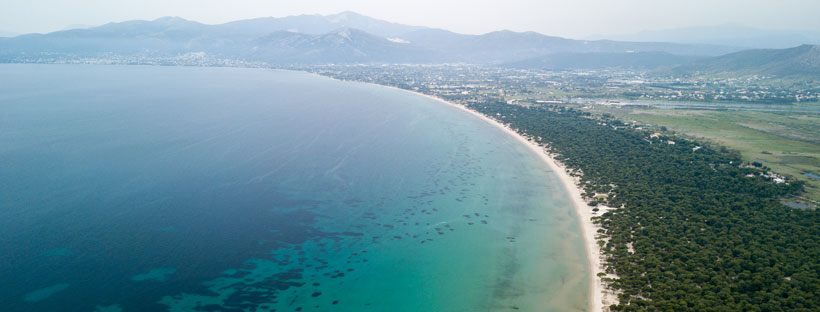

The Municipality of Marathon, in the Region of Attica, includes the municipal units of Marathon, Nea Makri, Varnavas and Grammatiko. It is the 5th largest municipality in Attica by area (226.55 km²) and has a population of 31,331 residents, with its seat in Marathon. The total population is estimated to almost double during the summer, as the municipality’s extensive coastal area is a popular holiday destination in Eastern Attica, but also due to the high number of visitors to the archaeological site.
The municipality’s territory includes protected sites within the Natura 2000 network, such as the Schinias Marathon National Park (Natura 2000 site code GR3000003), one of the most important ecosystems in Attica. The municipality has a semi-urban character, combining coastal and semi-mountainous areas, and its economic activity is mainly linked to agriculture and tourism.
Marathon also has a distinctive historic identity associated with the Battle of Marathon and the origin narrative of the marathon race, with the modern Athens Marathon recognised as the original marathon course and used as the marathon route in the 2004 Olympic Games in Athens.
Through its participation as a “taker” in the CirBioWaste project, the Municipality of Marathon will be able to adapt practical, already-tested approaches for biodegradable waste management to its local conditions, strengthen the operation of separate collection systems (especially for food waste), and reinforce citizen participation through structured awareness actions, supporting the municipality’s shift towards circular economy practices.