
OVER 850 INSPECTIONS AND AWARENESS ACTIVITIES IN CANELLI, CASTAGNOLE DELLE LANZE, AND SCURZOLENGO TO IMPROVE ORGANIC WASTE COLLECTION
The awareness rising campaign conducted under the European project CirBioWaste has concluded. Promoted by the Consorzio Italiano Compostatori (CIC) in collaboration with GAIA Spa, and supported by the Asti Waste Management Consortium (CBRA), ERICA Soc. Coop., and the municipal administrations of Canelli, Castagnole delle Lanze, and Scurzolengo, the initiative aimed to enhance the efficiency of the organic waste recycling value chain. Focusing on door-to-door collection, the campaign involved approximately 860 household users through a dual strategy: waste collection inspections combined with personalised information outreach.
The results were highly satisfying. While the analysis initially revealed a gap in public knowledge regarding organic waste sorting rules (organic waste was often disposed of with unsorted waste), citizens responded positively to the information provided. This demonstrated that clear, timely and ongoing communication is a fundamental tool for encouraging correct behaviours and ensuring high-quality waste separation over time.
The Awareness Campaign
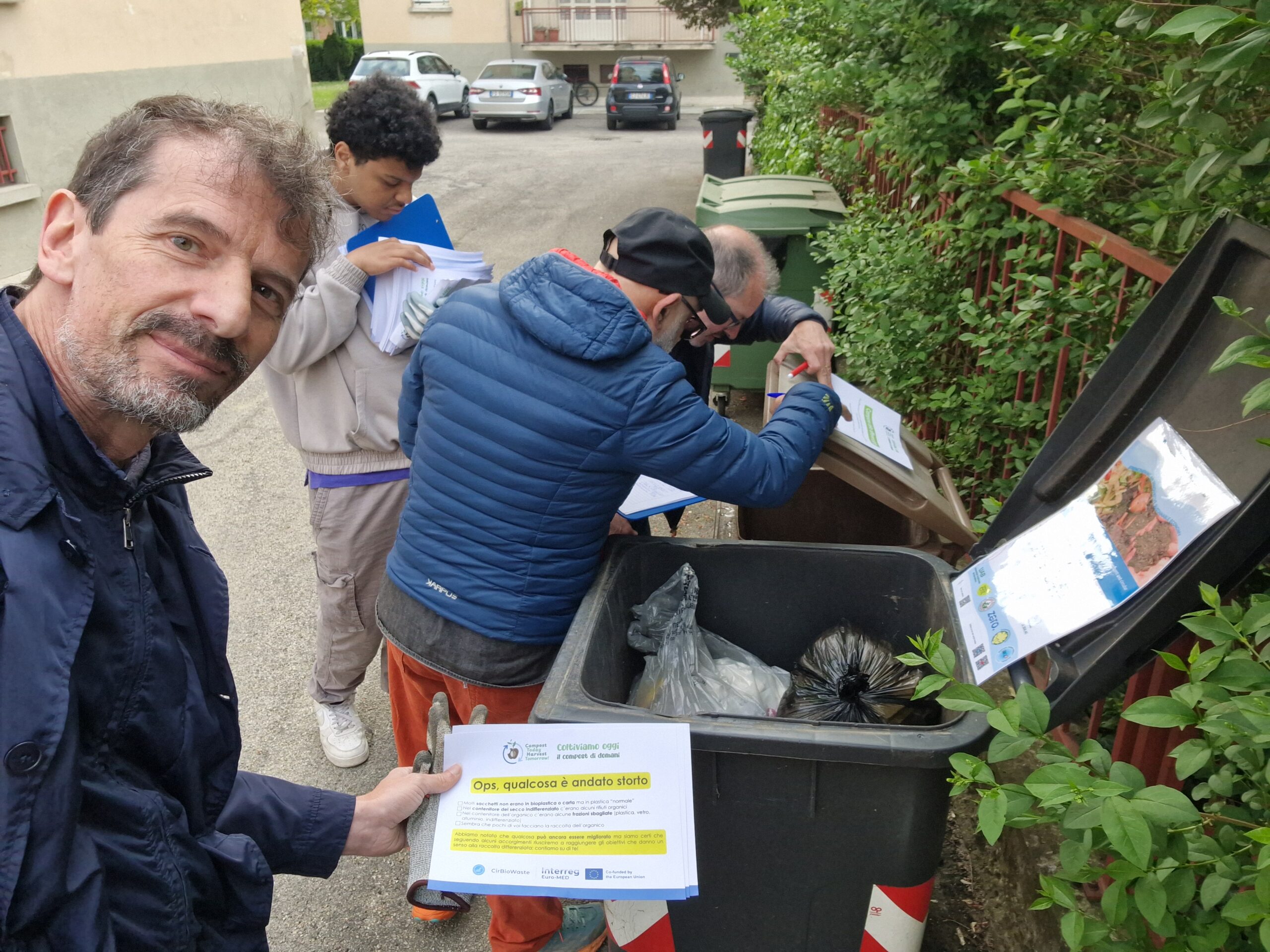
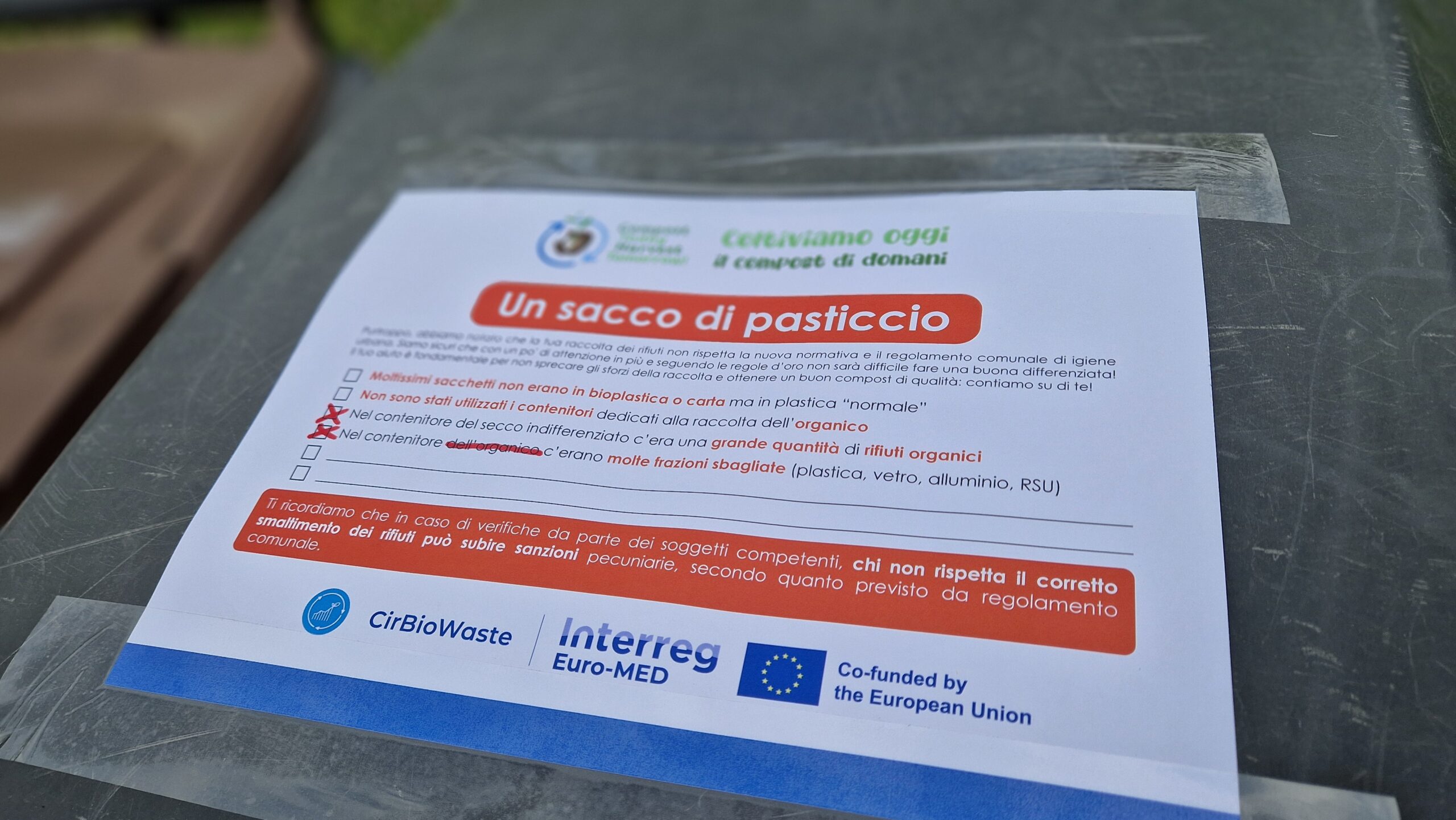
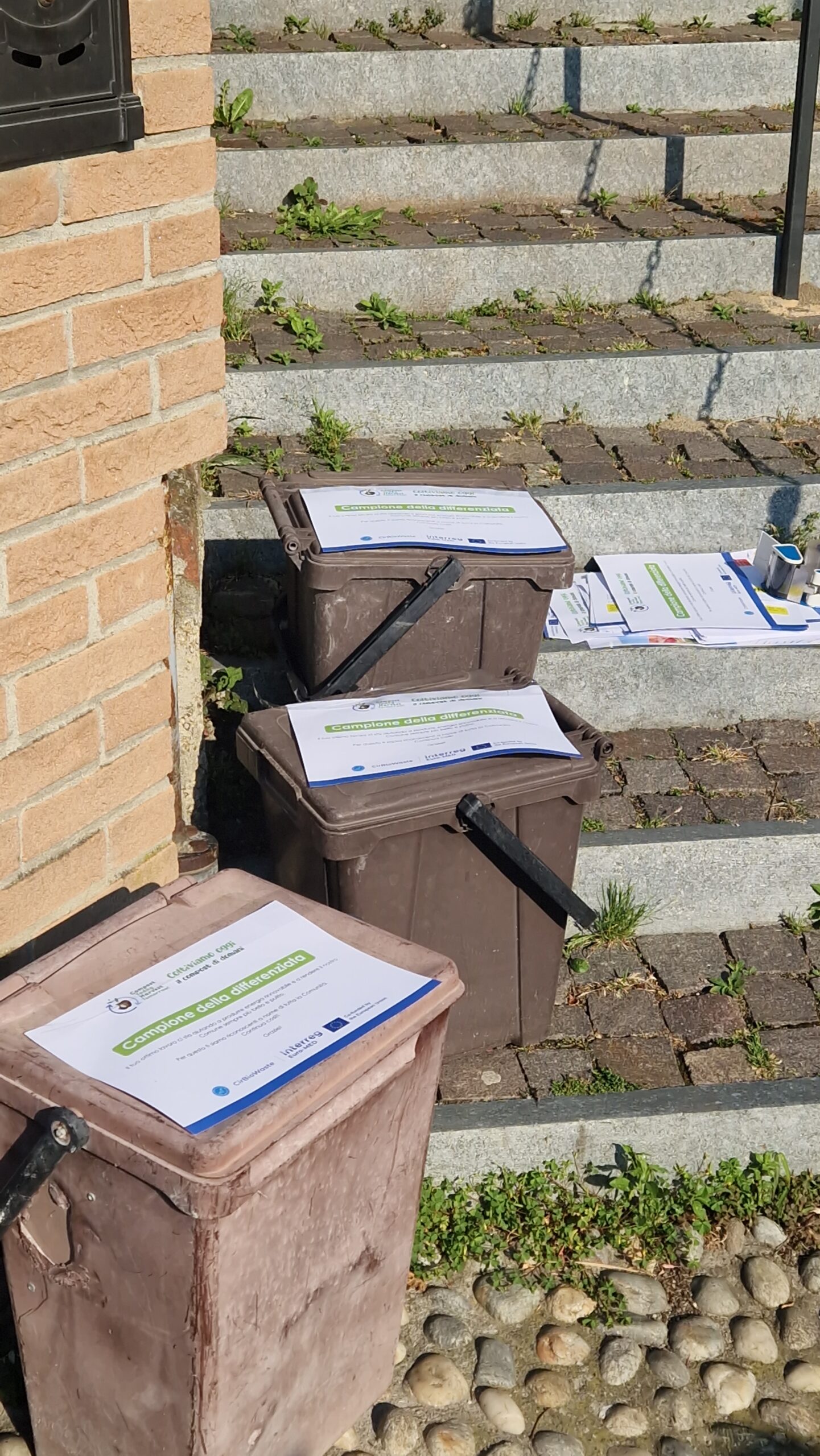
The campaign, titled “Compost Today, Harvest Tomorrow- Coltiviamo oggi il compost di domani,” consisted of two monitoring phases evaluating organic and residual unsorted waste bins, conducted by designated technical staff. Following each inspection, operators attached a color-coded tag based on a triage system:
- Green: Correct disposal
- Yellow: Minor, easily correctable errors
- Red: Non-compliant disposal
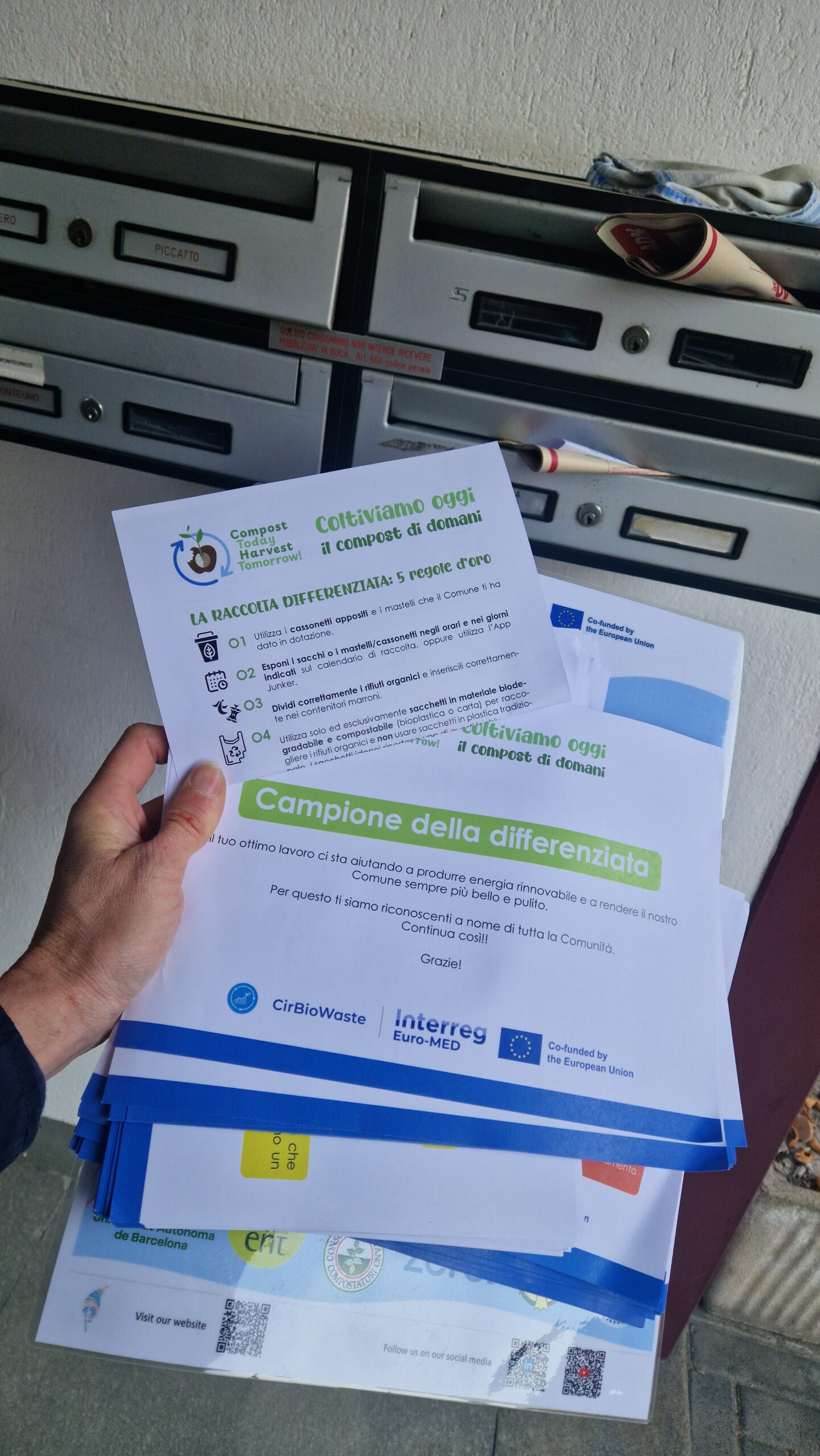
After the first inspection, residents received printed guidance featuring practical tips to improve sorting quality. The follow-up inspection made it possible to measure how effective this direct, personalized outreach was in encouraging better habits. In total, 859 inspections were conducted: 239 in Canelli, 229 in Castagnole delle Lanze, and 391 in Scurzolengo.
Findings: 30% of Organic Waste Sent to Unsorted Trash and Use of Non-Compliant Bags
Field monitoring and material analysis of organic waste performed at the GAIA Spa plant highlighted a widespread lack of knowledge regarding organic sorting rules—a awareness gap with a twofold negative impact:
- Impedes Resource Recovery: Roughly 30% of organic waste continues to end up in unsorted trash, mirroring national averages. When properly collected and recycled, this material turns into compost, enriching soil organic matter, boosting fertility, and strengthening agricultural resilience. This process is increasingly critical given international fertilisers market volatility and the need to maximise local resources.
- Reduces Recycling Efficiency and Increases Costs: Impurities multiply operational impacts during treatment, generating nearly three times as much waste as the initial contaminant introduced by dragging along recoverable organic matter. The economic toll is significant: every kilogram of organic waste thrown into unsorted trash results not only in a lost recyclable resource, but also in disposal costs 102% higher than the cost of processing it for recovery in compost.
Additionally, the analysis revealed a common challenge across Italy: approximately 30% of bags used for organic collection are made of traditional plastic rather than certified compostable materials. This error complicates processing, degrades final compost quality and increases disposal residue.
Results: Targeted, Continuous Communication is Key to the Circular Economy
Reversing this trend is achievable and targeted public communication is a proven tool. Results from the two-stage monitoring approach show that residents who received personalised information between the first and second checks made positive changes:
- In one municipality, sorting quality improved with an 8% increase in “green tags” and a 20% rise in organic waste collected.
- In another municipality, gains were primarily quantitative, yielding an extraordinary 30% increase in collected organic waste.
These figures prove that timely communication paired with active monitoring and feedback can rapidly raise both the quality and volume of sorted waste. Maintaining a continuous approach remains essential to solidifying positive habits and maximising the efficiency of the whole value chain.